Find the patterns in the records you keep
Our data science work looks through the records you already keep and shows you which patterns are worth acting on.
A few examples
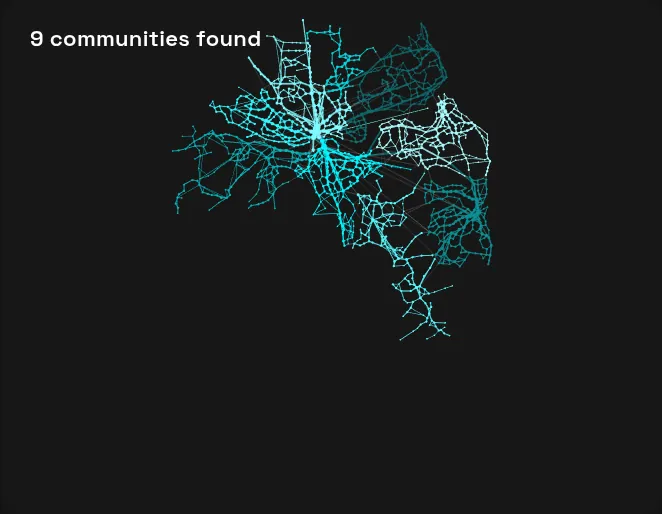
How Tyne and Wear’s buses connectNetwork analysis: finds natural groups among suppliers, sites or customers.
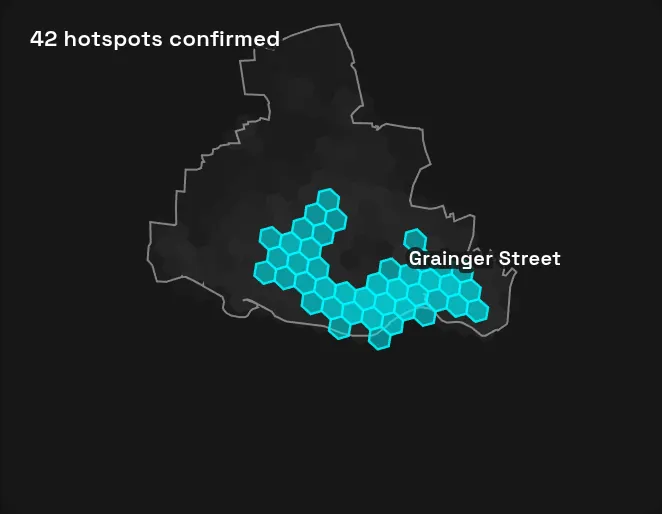
Where crime clusters in NewcastleHotspot mapping: shows where problems concentrate, and whether it is worsening.
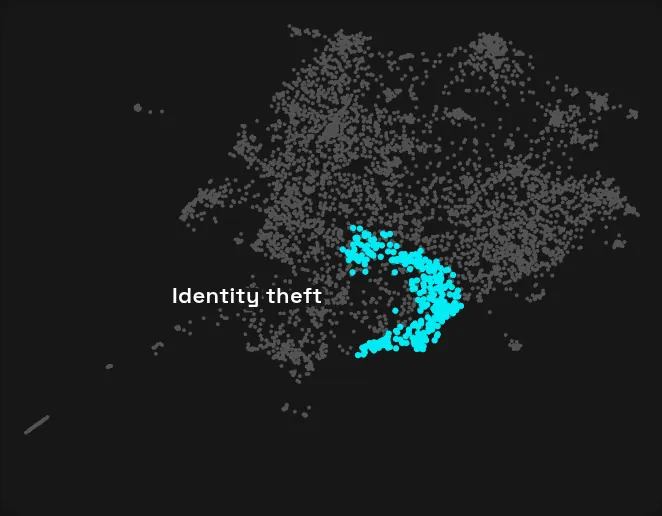
Sorting 5,000 customer complaintsText analysis: turns free-text feedback into clear, countable problems.
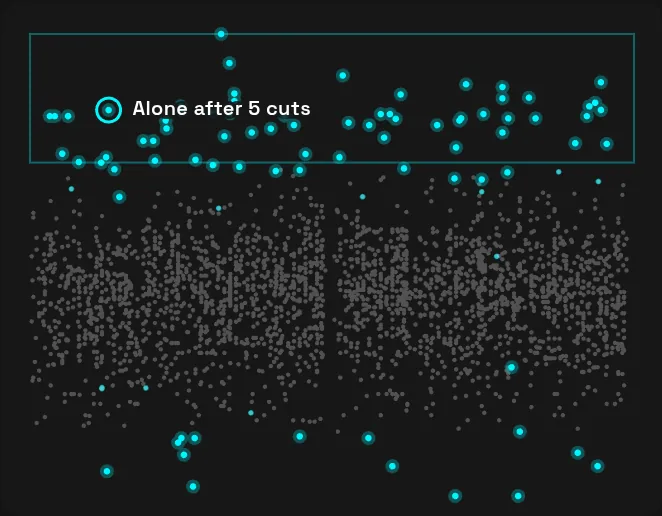
Unusual house sales in the North EastAnomaly detection: finds the few records worth a second look.
Questions like these
- Housing associations Which repair problems keep coming back in tenant complaints, and on which estates?
- Local councils Where are fly-tipping and noise reports clustering, and is it getting worse?
- Universities What are students actually saying in module feedback, course by course?
- Online retailers Which returns share the same fault, even when customers describe it differently?
- Bus and rail operators Which stops and routes behave as one network, and where would a timetable change ripple out?
- Accountancy practices Which client transactions look out of line and deserve a second look?
What working with us looks like
- Send us what you have
- An export from a spreadsheet, inbox or database. We remove names and personal details before we start.
- We look for the patterns
- We group similar records, map where problems cluster and flag the cases that don’t fit.
- You see how big each one is
- Counts, real examples and, where your records allow, what each pattern is costing you.
- The same check next quarter
- Written steps, so next quarter’s records can be run the same way and compared.
You’d work with Nicola
PhD Statistics, Newcastle University · Co-Director
Nicola has a PhD in Statistics from Newcastle University, specialising in Bayesian inference and predictive analytics. She’s a former lecturer at Newcastle University, with published research on modelling change across place and time and on real-time prediction systems.
Common questions
- What data do we need?
- Whatever you already collect, from complaints and survey comments to sales, locations or transactions. A spreadsheet export is usually enough to start.
- Does our data have to leave our systems?
- Not necessarily. The models we use can run on a computer you control. If an online service would do noticeably better, we’ll tell you and let you decide.
- Who do we need on our side?
- Someone who knows where the data lives and which questions matter to you. No technical staff are needed.
Bring us the records you haven’t had time to look at
We’ll tell you what’s in them and which patterns are worth acting on first. The first conversation is free.