Plan stock, staff and cash for what’s coming
If your plans for next month rest on a hunch, our forecasting gives you a realistic range to plan around.
A few examples
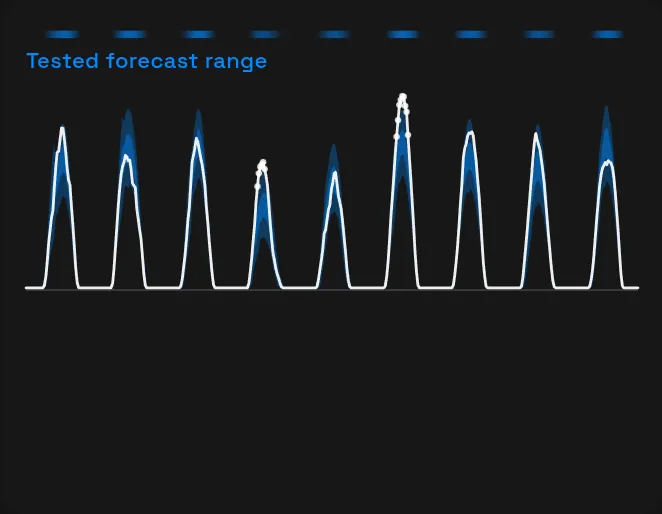
Tomorrow’s solar power across BritainDay-ahead forecasting: plans for tomorrow with tested ranges.
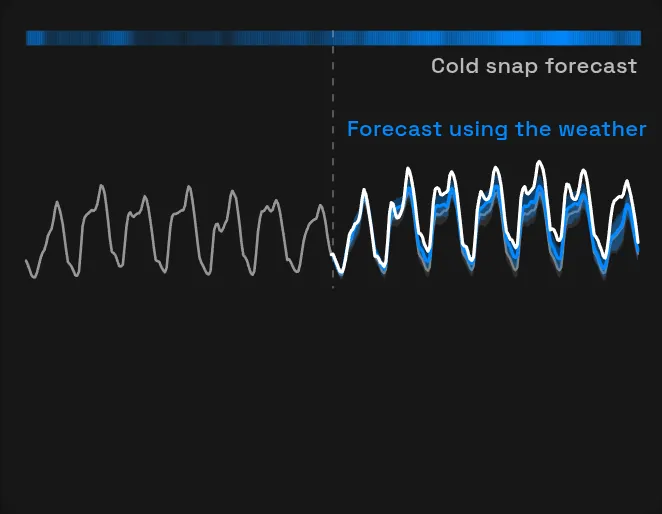
Electricity demand in a cold snapWeather-aware forecasting: builds the weather into demand forecasts.
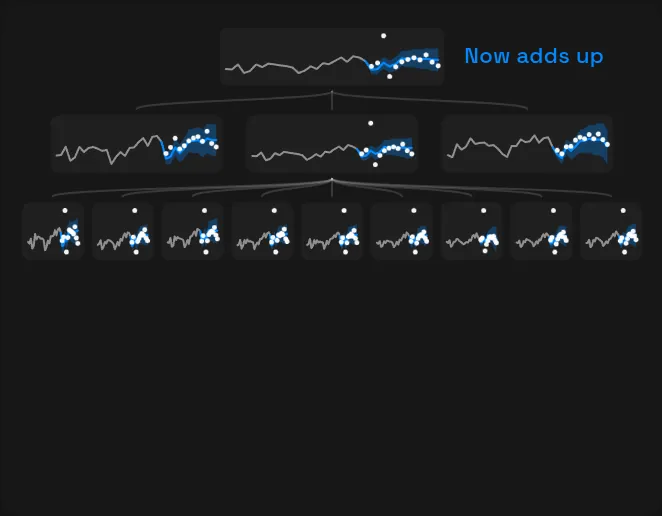
Home sales, region by regionHierarchical forecasting: branch, region and total forecasts that add up.
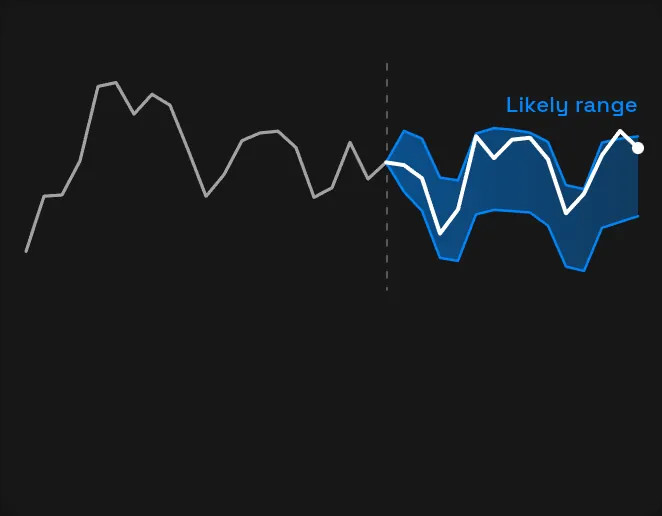
Two weeks of national electricity demandFoundation models: an AI forecaster trained on many kinds of series.
Questions like these
- High street retailers How many people do we need on shift over the next four Saturdays?
- Garden centres How much stock should we order for spring, and how early?
- Energy suppliers How much will our customers use next week if a cold snap arrives?
- Call centres How many calls will come in next week, and how many people do we need on the phones?
- Hotels and holiday lets How full will we be this summer, and how low could bookings go?
- Builders’ merchants What will each branch sell next quarter, in figures that add up to a company total we can budget on?
What working with us looks like
- Your past figures
- Records of what you want to forecast, such as sales, bookings or calls, in whatever form you keep them.
- Tested on weeks it hasn’t seen
- We check how each forecast would have done on past weeks it hadn’t seen, so you know how far to trust it.
- A best guess and a range
- A low, likely and high figure for each day, week or month, in the spreadsheet or system you already use.
- Easy to keep up to date
- The working and a short guide, so your team can update the forecast as new figures come in.
You’d work with Nicola
PhD Statistics, Newcastle University · Co-Director
Nicola has a PhD in Statistics from Newcastle University, specialising in Bayesian inference and predictive analytics. She’s a former lecturer at Newcastle University, with published research on modelling change across place and time and on real-time prediction systems.
Common questions
- What data do we need?
- Past records of whatever you want to forecast, such as sales, bookings or calls. The more history the better, ideally with each busy and quiet season appearing more than once. Dates of promotions, closures or price changes help too.
- What does a first forecast look like?
- One series you plan around, tested against your own past, with a range for each period. You’ll see how it would have done before you rely on it.
- Will it fit how we work now?
- Yes. Forecasts come back in the spreadsheet or system you already use, with a short guide to keeping them up to date.
Send us the numbers you plan around
Tell us what you need to decide and how far ahead. The first conversation is free.