See problems coming before they cost you
A machine learning model trained on your own records can flag the early signs, while there’s still time to act cheaply.
A few examples
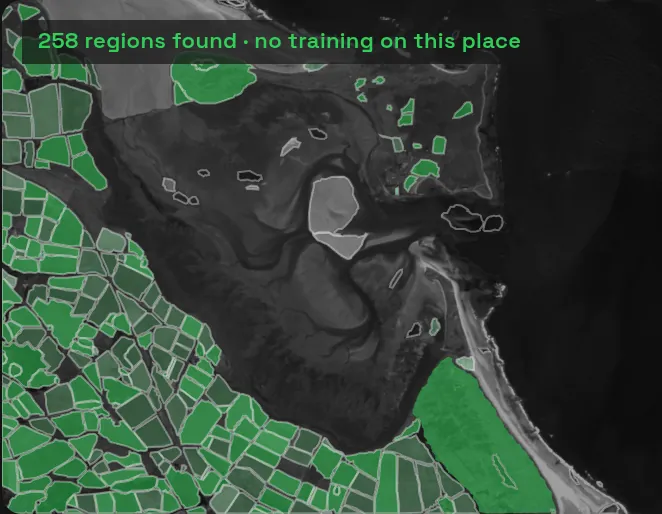
Outlining Lindisfarne from spaceImage segmentation: finds and measures things in photos, scans or satellite images.
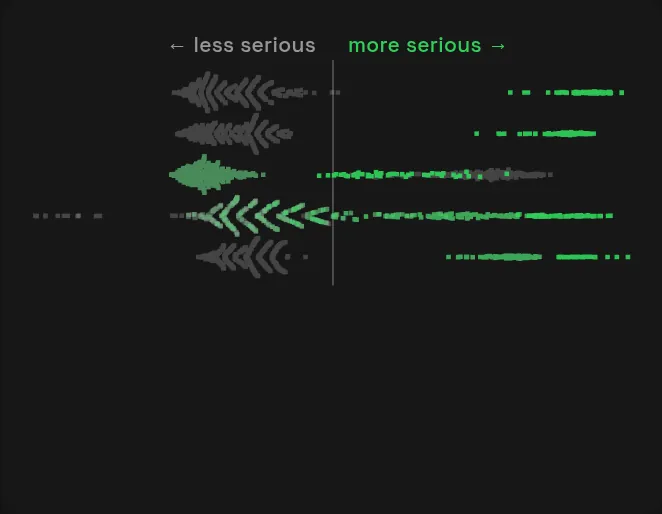
Which road collisions turn seriousExplainable prediction: forecasts an outcome and shows what drove it.
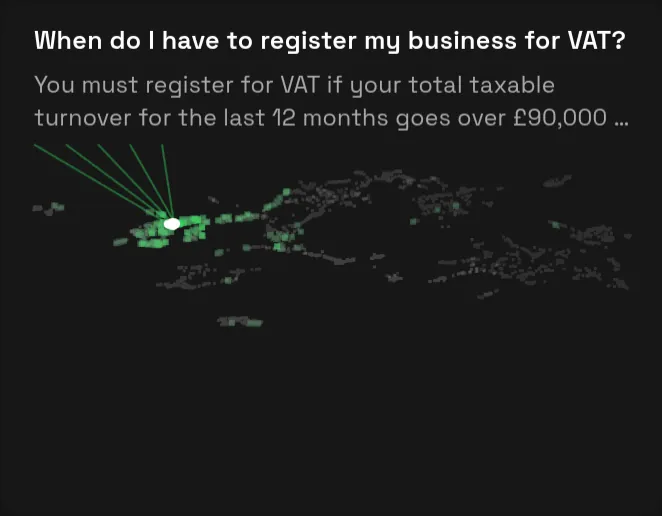
Answering questions from GOV.UK guidanceDocument question answering: answers from your own files, with sources.
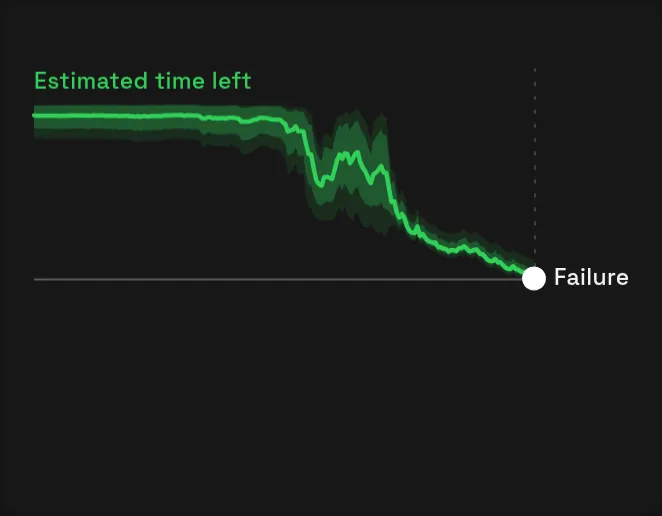
When a jet engine will need attentionPredictive maintenance: estimates time left before a machine fails.
Questions like these
- Manufacturers Which of our machines is most likely to break down next month?
- Fleet operators Which vehicles should go in for a service before they let us down?
- Water companies Which pumps and pipes are showing early signs of failure?
- Gyms and leisure centres Which members are starting to drift away before their renewal comes up?
- Farms and estates Can aerial or satellite images show which fields need attention first?
- Law firms Can staff get answers from our own guidance and precedents in seconds, with the source attached?
What working with us looks like
- Your question and your records
- Spreadsheets, job logs, a database or sensor readings: whatever you keep about how things turned out.
- A straight answer on what’s possible
- We look at your records first and say whether a model would help, or whether something simpler would do.
- Warnings you can plan around
- Each prediction comes with a range, and it’s tested on cases it has never seen.
- Built into what you use
- It runs alongside your existing systems, and you get everything, with notes your team can follow.
You’d work with Nick
PhD Physics, Newcastle University and University of Trento · Co-Director
Nick has a PhD in Physics from Newcastle University and the University of Trento, specialising in machine learning and mathematical modelling. He was a postdoctoral researcher at Newcastle University, with published work on deep learning for complex systems.
Common questions
- What data do we need?
- Records of past cases and how they ended: when a machine failed, when a customer left, when a job ran late. We’ll look at what you have and tell you whether it’s enough.
- What does a first project look like?
- Usually one question and one set of records, taken far enough to show whether a model beats what you do now. You decide from there.
- Do we need technical staff?
- No. We do the technical work. We just need someone who knows how your records are kept.
What do you wish you could see coming?
Tell us, and we’ll tell you whether your records could predict it. The first conversation is free.