See what would happen before you risk it
When you can’t try something for real, a mathematical model shows you what would happen first.
A few examples
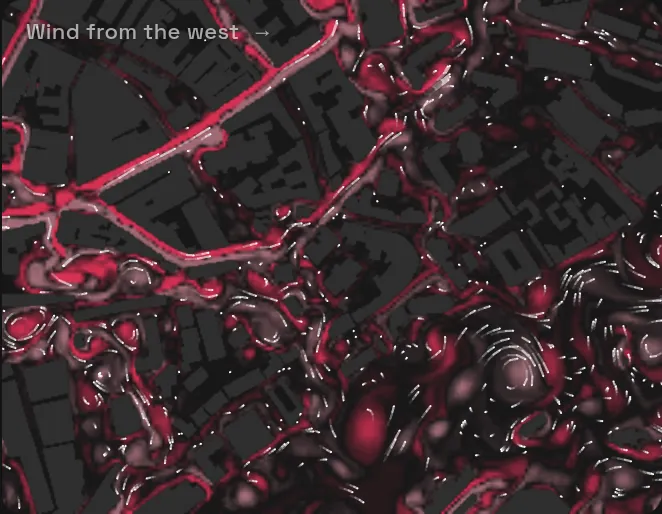
Wind through Newcastle’s streetsAirflow simulation: tests sites and designs before anything is built.
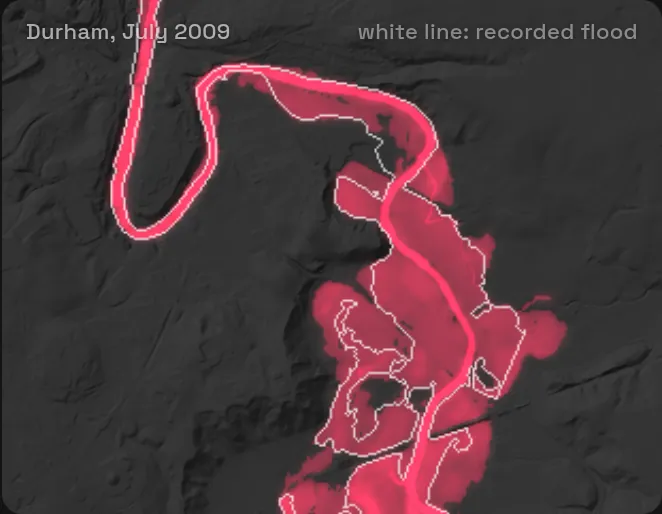
Durham’s 2009 river floodFlood modelling: shows where water would reach, checked against a real flood.
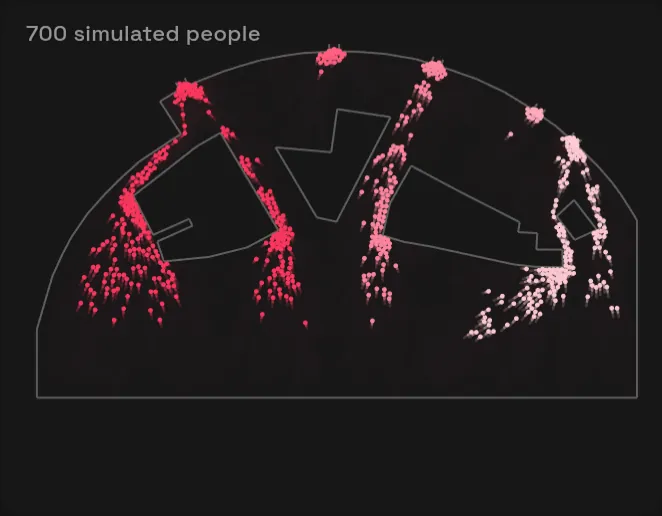
A simulated crowd at King’s CrossCrowd simulation: tests layouts, queues and evacuations safely.
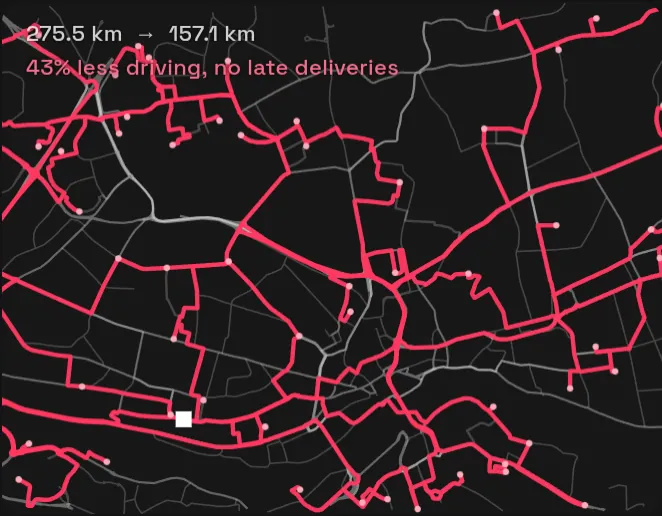
Delivery rounds across NewcastleRoute optimisation: plans rounds that cut miles and meet delivery slots.
Questions like these
- Hospitals How many beds and staff do we need when a busy week arrives on top of winter?
- Warehouses and distributors How much stock do we need to get through a peak week without running out?
- Stadiums and event venues Where do queues and crowds build up if we open another gate or move the bar?
- Ports and airports Where does the queue form when two arrivals land at once, and what clears it fastest?
- Property developers How will wind behave around the new building before a brick is laid?
- Couriers and delivery firms How many vans, and which rounds, would cover the new area without missing delivery slots?
What working with us looks like
- The change you’re weighing up
- What you want to try, plus any records, plans or know-how about how things work now.
- A model of how it works
- As simple as the question allows, and checked against what really happened before we rely on it.
- Side by side
- We run the changes and bad days you’re worried about together, and note where the model is unsure.
- Answers, and the model if you want it
- Clear answers, plus the model or a simple tool if you’d like to keep trying ideas.
You’d work with Nick
PhD Physics, Newcastle University and University of Trento · Co-Director
Nick has a PhD in Physics from Newcastle University and the University of Trento, specialising in machine learning and mathematical modelling. He was a postdoctoral researcher at Newcastle University, with published work on deep learning for complex systems.
Common questions
- What information do we need?
- Often just a description of how things work and some past records to check the model against. We’ll tell you early if anything important is missing.
- Who do we need on our side?
- Someone who knows how things work day to day and can tell us when the model looks wrong. No technical staff are needed.
- Can you tell us the flood risk to our property?
- No. The Durham flood example on this page shows how we work; it isn’t a flood risk assessment. For flood risk to a property, use the Environment Agency’s Check your long term flood risk service.
What would you like to try?
Tell us the change or situation you’re weighing up, and we’ll tell you whether a model would help. The first conversation is free.